
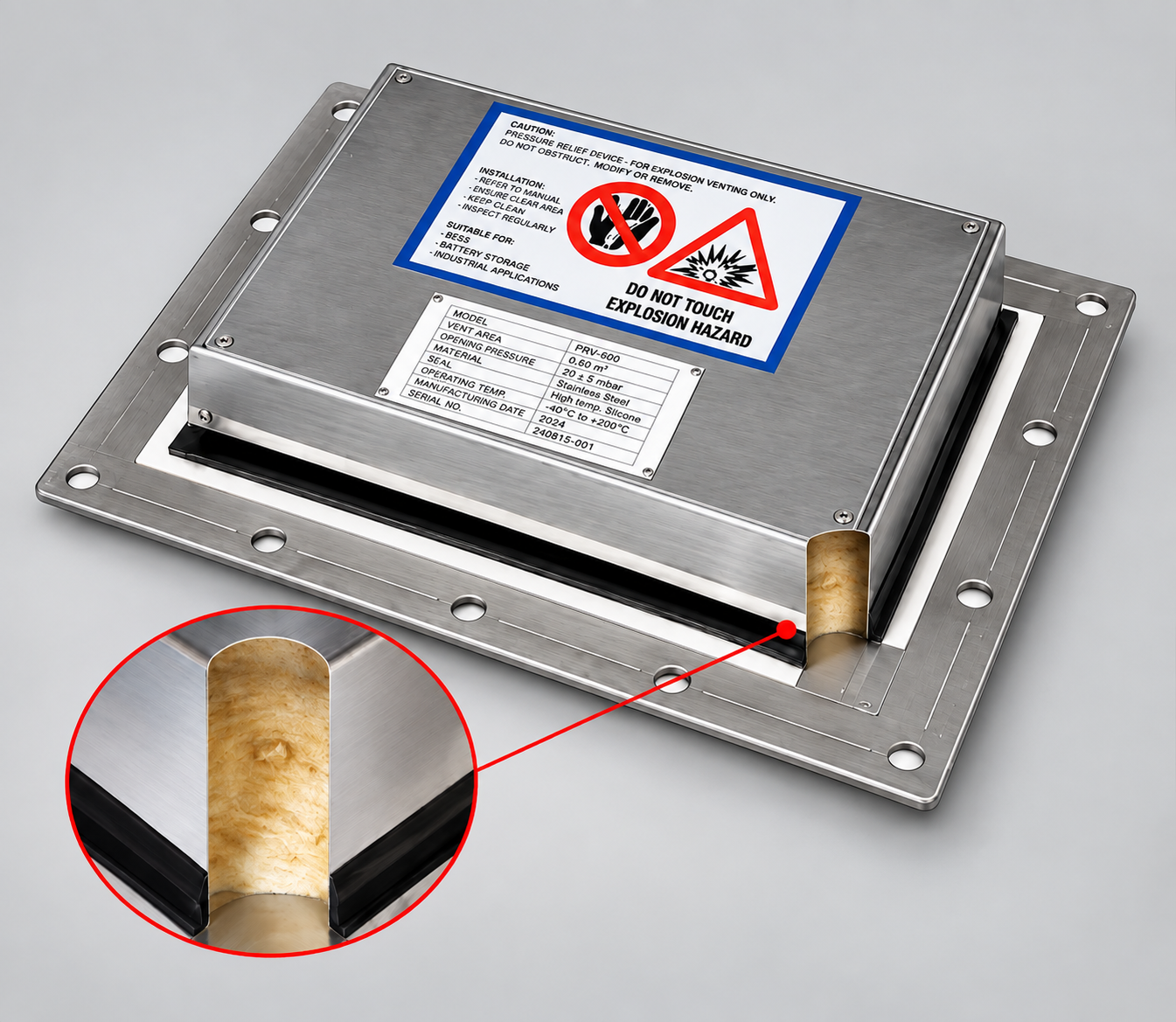
Battery Energy Storage System
Battery Energy Storage Systems (BESS) support the shift toward sustainable energy and are used in temporary, standby, off-grid, and permanent applications. However, large-scale and containerized BESS installations require careful assessment of safety concerns, particularly the risks of fire and explosions. Flammable gases, vapors, combustible dusts, excessive heat, and ignition sources can increase the risk of fire and explosions. BESS installations can use different battery types, making proper safety measures and ongoing development of safety standards essential.
Features
- Suitable for static over/under pressure conditions up to 50 percent of the rated rupture pressure
- Cross-rib and folded edges for long-life durability and venting efficiency
- Integrated flange gasket
- Insulated panels for installation in harsh climate locations
- IP-67 and corrosion resistant stainless steel construction
- Optional burst sensors
Application
- Typically the most cost effective option in terms of installation and maintenance.
- Passive Protection devices take the form of explosion relief vent panels.
- Safely divert the deflagration to a safe place (atmosphere).
- Prevent rapid development of explosion pressure from causing container rupture, structural damage and possible injuries to personnel.
- Vent sizing is based on explosivity characteristics of the vapors that may be off-gassed from the specific type of batteries.
- Vent sizing also considers container strength, including door latches and hinges.
- Opening pressure of the vent panels and free area atop the storage unit are considered for vent sizing.
Standards
- NFPA 855-2020 provides specific guidance for the safe design, testing, operation, and maintenance of BESS installations.
- Other global industry standards also provide guidance for BESS installations.
- Explosion protection options fall into two categories: Passive Protection and Active Protection.
- NFPA 855 provides a third alternative using Gas Detection with Emergency Ventilation under certain circumstances.
- Gas Detection with Emergency Ventilation must be approved by the Authority Having Jurisdiction (AHJ) based on large scale testing.
- Gas Detection with Emergency Ventilation combined with Passive or Active Protection will increase the overall safety of the protection system.
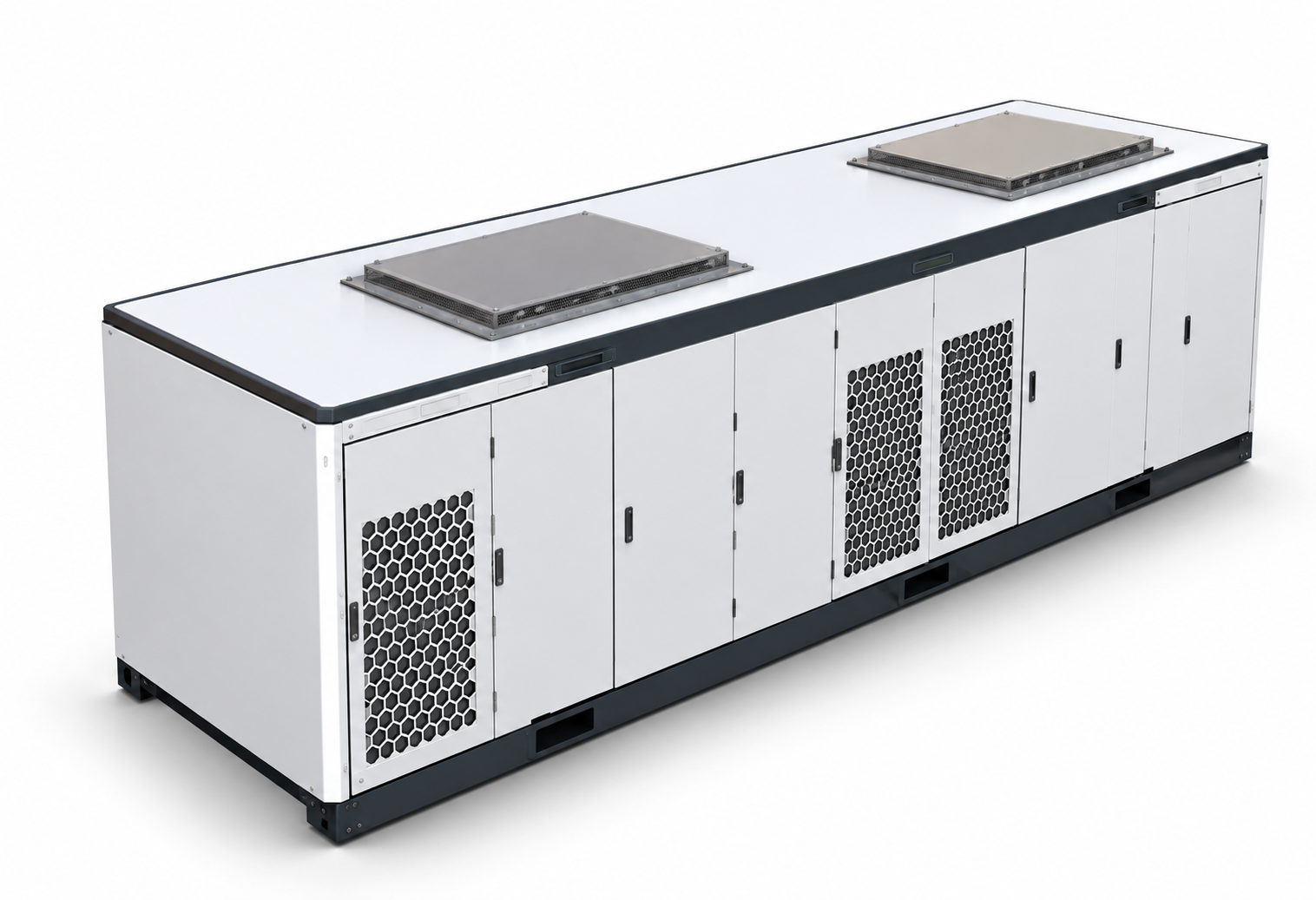
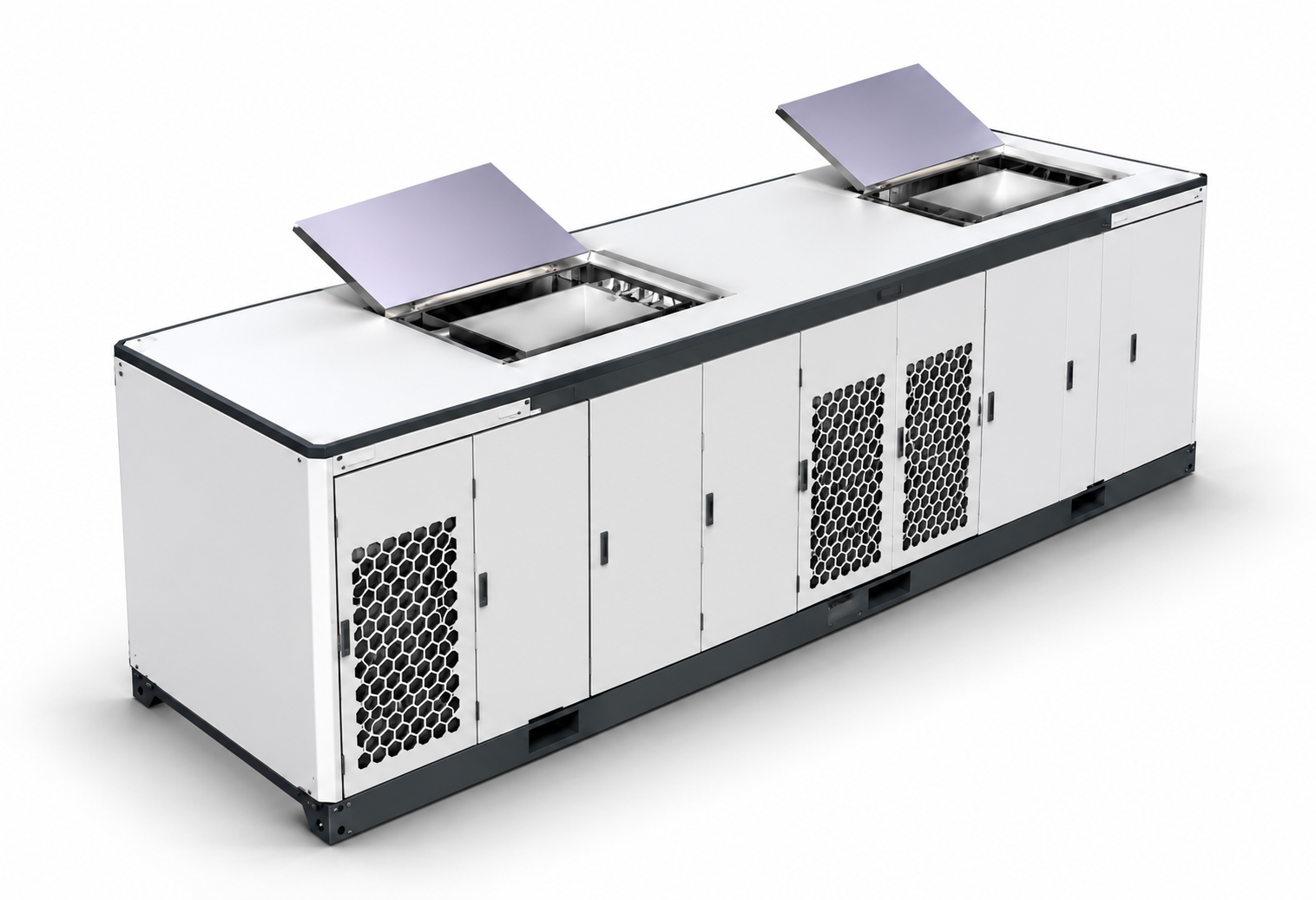
BESS-eX® Vent Application
Normal Conditions
Post Explosion Condition
Our Location